Operationalizing Saildrone to Counter Drug Trafficking and Illegal Fishing
The Navy built on its success with Task Force 59 experimentation by bringing unmanned systems to US Fourth Fleet, to support long-term operations that counter drug trafficking and illegal fishing.
The Problem
The US Navy expanded its unmanned systems testbed to the 4th Fleet to counter drug and human trafficking, as well as illegal fishing in South and Central America. While modeled after Task Force 59 in 5th Fleet, Operation Windward Stack differed in its core objective: rather than establishing a task force dedicated to technological experimentation, Navy leadership sought to integrate select unmanned systems directly into routine, long-term operations. The goal was to create a sustained, hybrid environment where manned and unmanned forces worked together to maintain persistent maritime domain awareness.
Solution
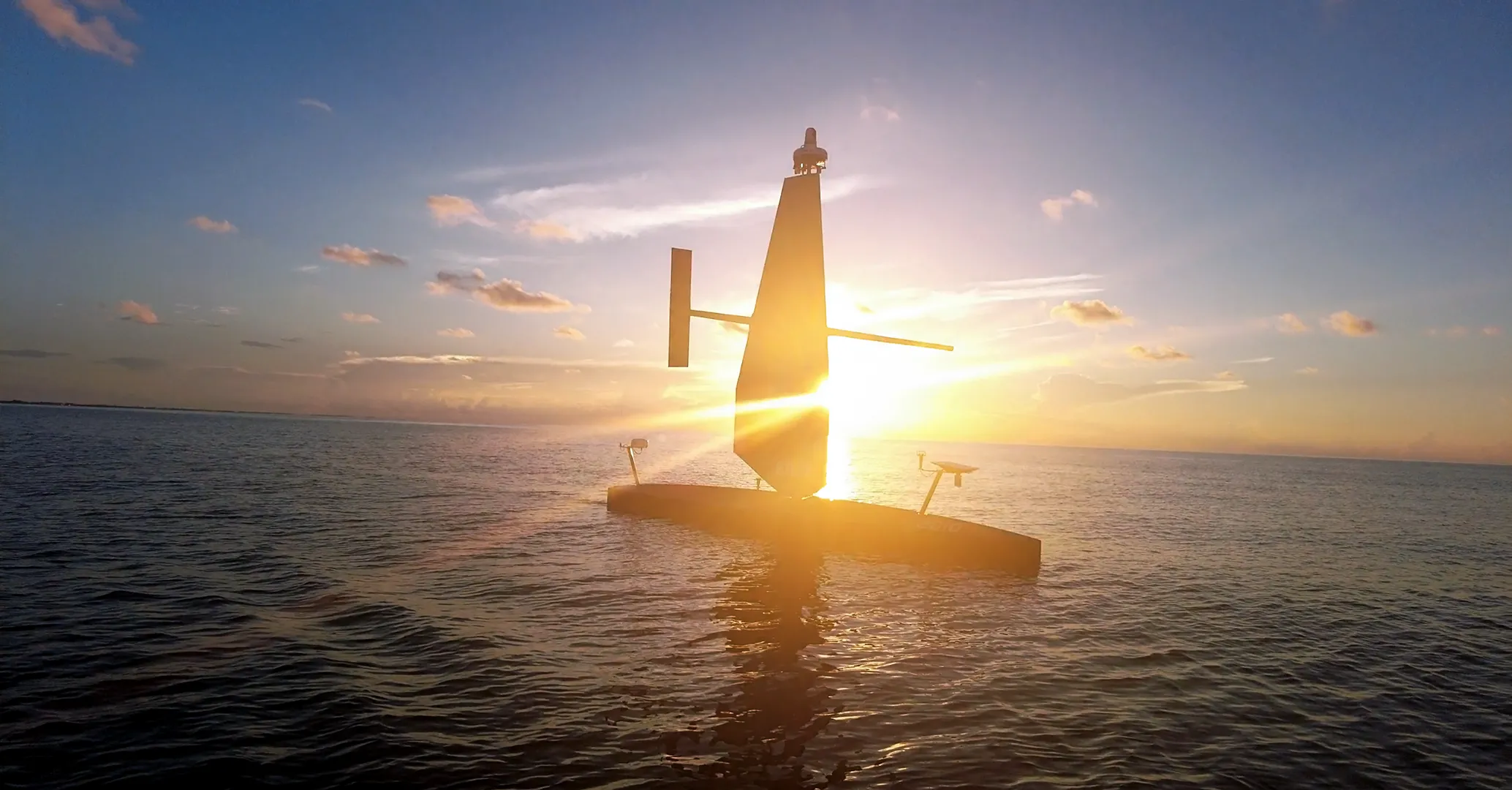
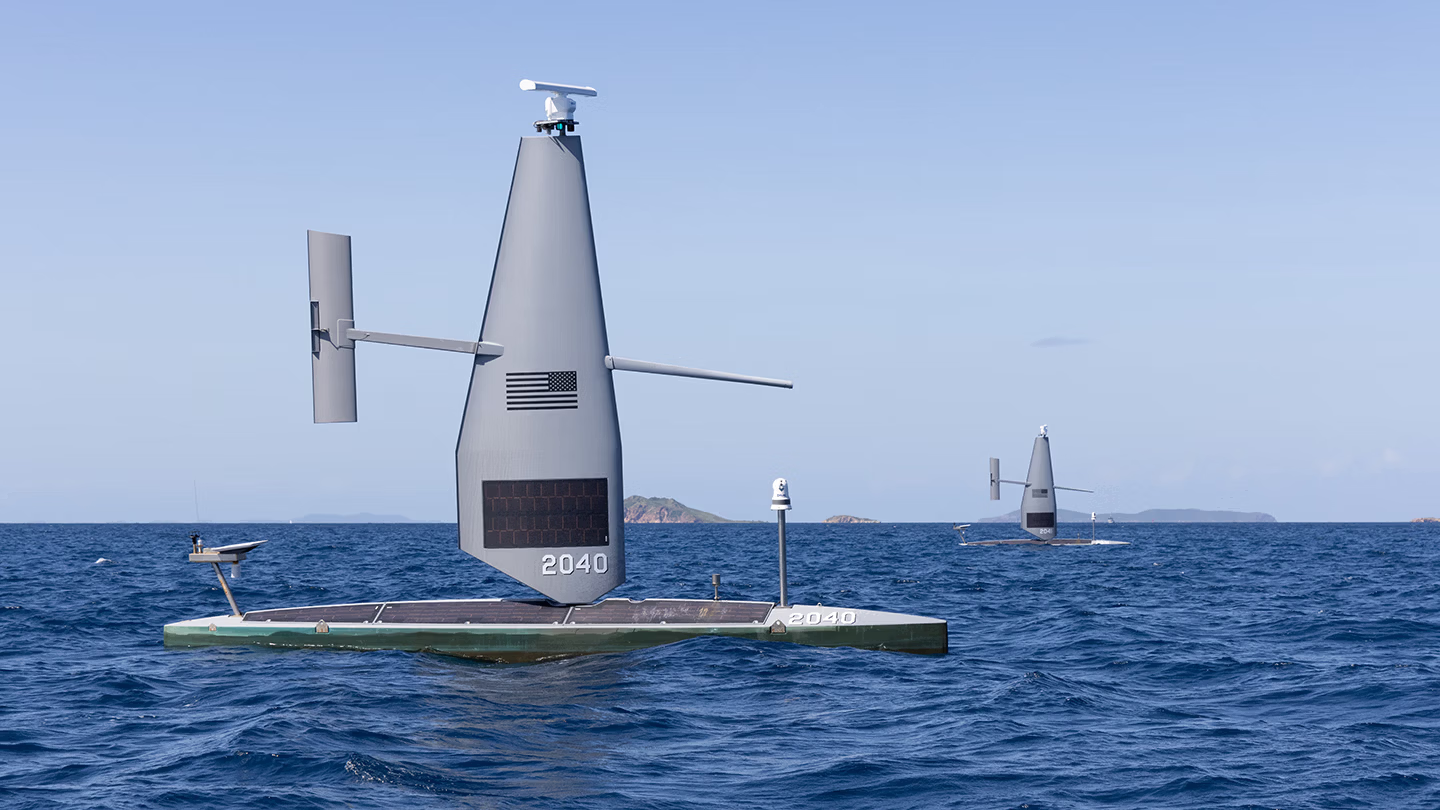
To address these requirements, Saildrone deployed a fleet of 10 Voyager unmanned surface vehicles (USVs) to the Caribbean Sea and the Gulf of Mexico. Unlike previous short-term experiments, this deployment focused on embedding unmanned systems into the 4th Fleet’s daily routine to establish persistent surveillance. Saildrone worked closely with Navy operators and watchstanders to refine manned-unmanned teaming, identifying the most effective asset combinations for specific mission sets. This collaboration enabled the Navy to optimize watch floor operations for high-volume sensor data and to develop robust hybrid command-and-control protocols for managing autonomous platforms alongside traditional manned ships in a real-world operational environment.
Outcome
The integration of the Voyager fleet delivered significant improvements in maritime domain awareness and operational efficiency. Over the course of the operation, the 10 Voyager USVs sailed more than 130,000 nautical miles over 2,700 cumulative mission days, detecting 116,000 unique contacts—an average of 43 per vessel per day. Crucially, 98,000 of those contacts were not broadcasting AIS, providing visibility into “dark targets” that would have otherwise gone undetected. According to the Center for Naval Analysis, Saildrone covered 12,500 square nautical miles at a remarkably low cost of $4.25 per nautical mile per day.
Beyond these metrics, the fleet successfully mapped trafficking routes and served as a deterrent that resulted in fewer migrant departures, directly improving safety of life at sea. The mission proved the Navy’s ability to maintain USVs at sea for six to nine months at a time, successfully transitioning the service from experimental testing to a sustained, hybrid fleet model.
Saildrone Voyagers helped the Navy shadow three Russian ships as they approached Cuba in June 2024.

“[Saildrone] actually served as a deterrent, and folks who would actually run a migration ship north—maybe into the United States or somewhere else into the Caribbean—no longer did it, because they realized that they were being watched.”


Start Your Mission Today
Contact us now to discuss your mission requirements.