Proven Maritime Autonomy for Modular Mission Effects
Long-endurance platforms designed to support customer- and partner-furnished kinetic and non-kinetic payloads.
Saildrone provides commercially developed USV platforms, autonomy, power, communications, and at-sea operations for distributed maritime missions. A modular architecture enables customers and qualified mission-system partners to integrate specialized payloads while retaining responsibility for payload-specific control, authorization, and employment.
.svg)
Mission-Ready Platforms Supporting Maritime Strike and Deterrence
Saildrone extends the reach and persistence of customer-selected mission systems by providing a proven unmanned platform and fully managed operations at sea. Customers and qualified third-party partners can supply and integrate their own payloads for installation on Saildrone’s modular platform to perform specialized missions.
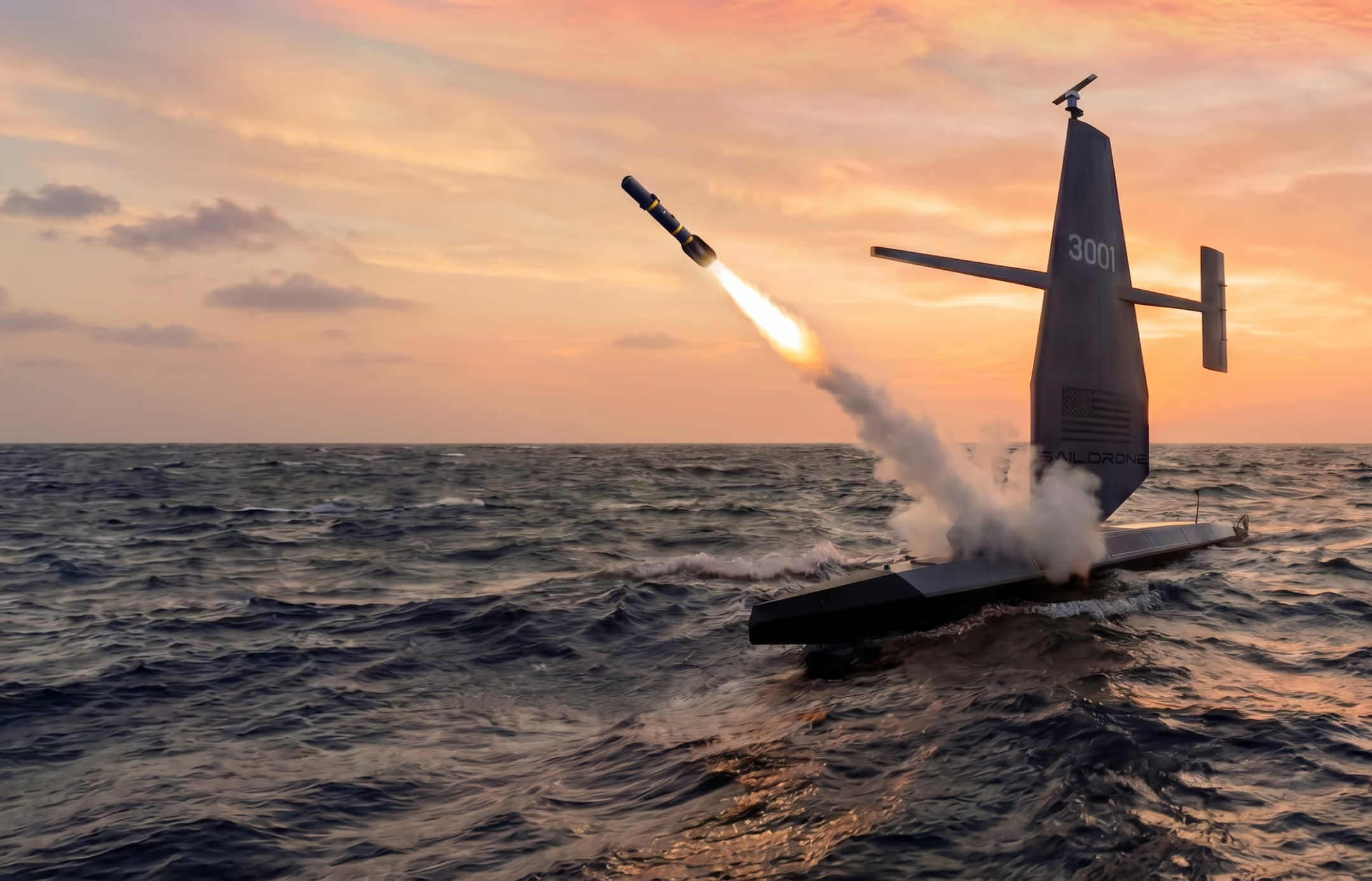
Modular customer integration of kinetic payloads, including strike and loitering munitions, precision-guided interceptors, torpedoes, and mine-laying systems
Robust base platform on which customers can install payloads to support electronic warfare (EW) and non-kinetic effectors, such as RF jammers and laser dazzlers
Persistent, forward-deployed deterrence maintaining a presence across strategic chokepoints and remote maritime zones
Ability to support customer interfaces and C2 systems
Support for Defense Payloads
Saildrone USVs combine remote navigation, surface-awareness sensors, secure communications, and configurable payload interfaces.
Saildrone platforms have the ability to integrate payloads that use Lockheed Martin’s command-and-control architecture, while specialized mission systems, payload-specific controls, and employment functions remain the responsibility of and in the exclusive possession of the customer and mission-system partner.
High-resolution imagery for identifying targets, verifying threats, and providing visual confirmation prior to effector deployment.
Reliable tracking of non-cooperative targets using commercial radars, providing actionable target acquisition data in poor visibility, at night, and in congested waters.
Saildrone USVs feature commercial transceivers that broadcast and receive signals. Onboard receivers continuously ingest data from cooperative vessels and correlate it with radar and EO/IR detections to verify target identity.
GNSS, inertial sensors, and onboard computing systems support adherence to mission patterns. Multiple forms of localization ensure operation in GPS-denied or spoofed environments. This resilient positioning system allows Saildrone USVs to maintain forward-deployed deterrence.
Targeting data and fire-control authorizations are transmitted through isolated and secure customer C2 systems, ensuring safe and authorized payload deployment.
Proven Operations in the Harshest Environments
Unmatched autonomous endurance enables months-long missions without fuel logistics, keeping customer payloads and effectors forward-deployed and on-station far longer than conventional crewed assets.
Minimal acoustic and radar signatures enable discreet positioning in contested or high-risk regions, providing a critical tactical advantage.
Saildrone USVs operate reliably in remote theaters and withstand extreme weather conditions, without burdening operational manpower or resources.