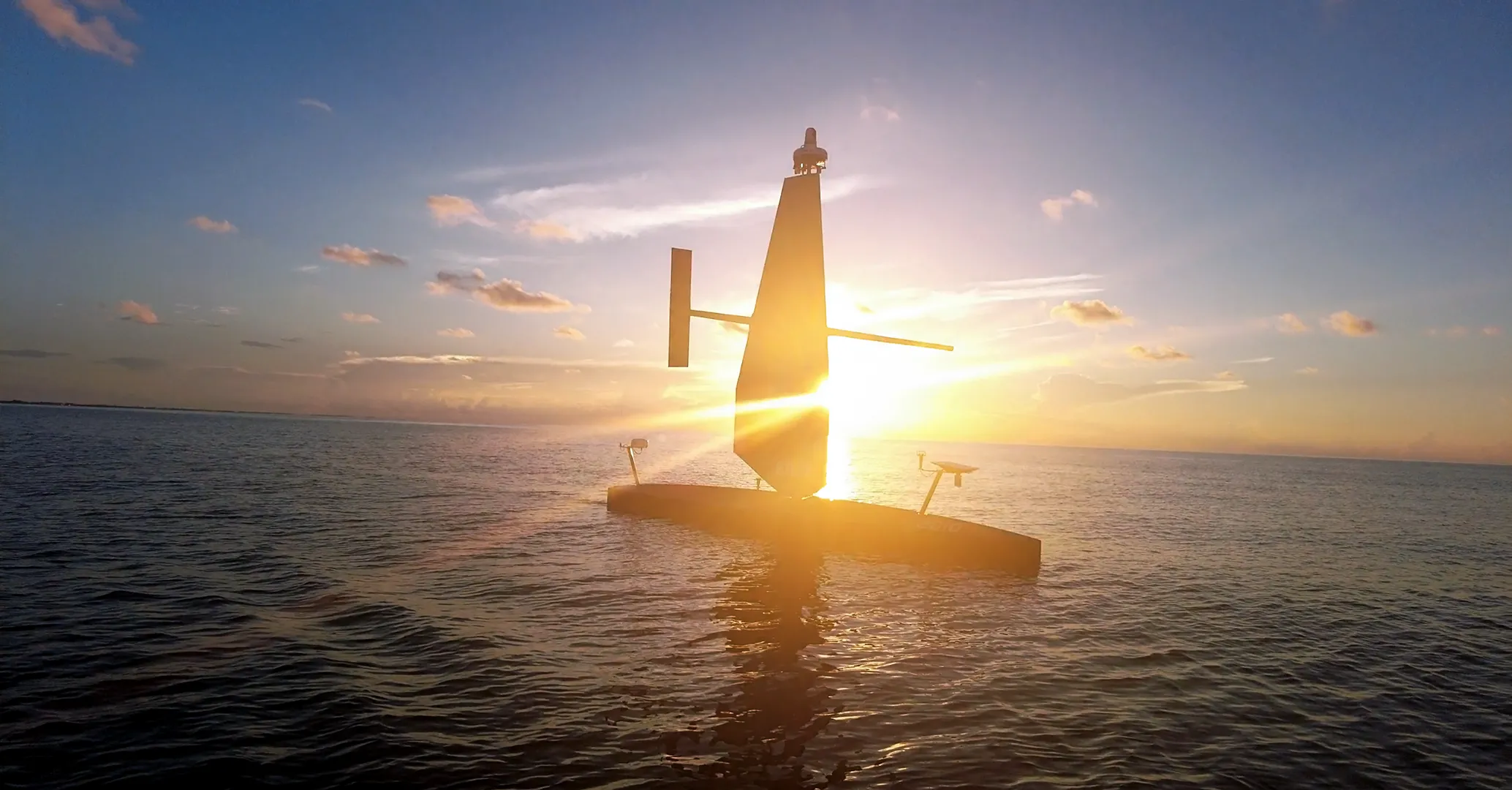
Persistent Intelligence for Maritime Forces
Autonomous systems engineered for high-endurance and wide-area detection, classification, and tracking—delivering the decision advantage required to secure national and global maritime interests.
Saildrone provides real-time, wide-area maritime domain awareness (MDA) using long-endurance unmanned surface vehicles (USVs) equipped with advanced payloads. By combining autonomous navigation, AI-powered detection, and multi-sensor fusion, Saildrone delivers decision-quality intelligence across vast ocean regions—at a fraction of the cost and risk associated with manned assets.
.svg)
Strategic Maritime Superiority
Saildrone provides persistent intelligence using fully autonomous USVs. Operating for months without refueling, these systems detect, classify, and track vessels across wide maritime regions, delivering real-time, decision-quality data to maritime security operators.
Persistent surveillance using radar, EO/IR, AIS, and custom payload integrations
Real-time detection and classification of cooperative and non-cooperative vessels
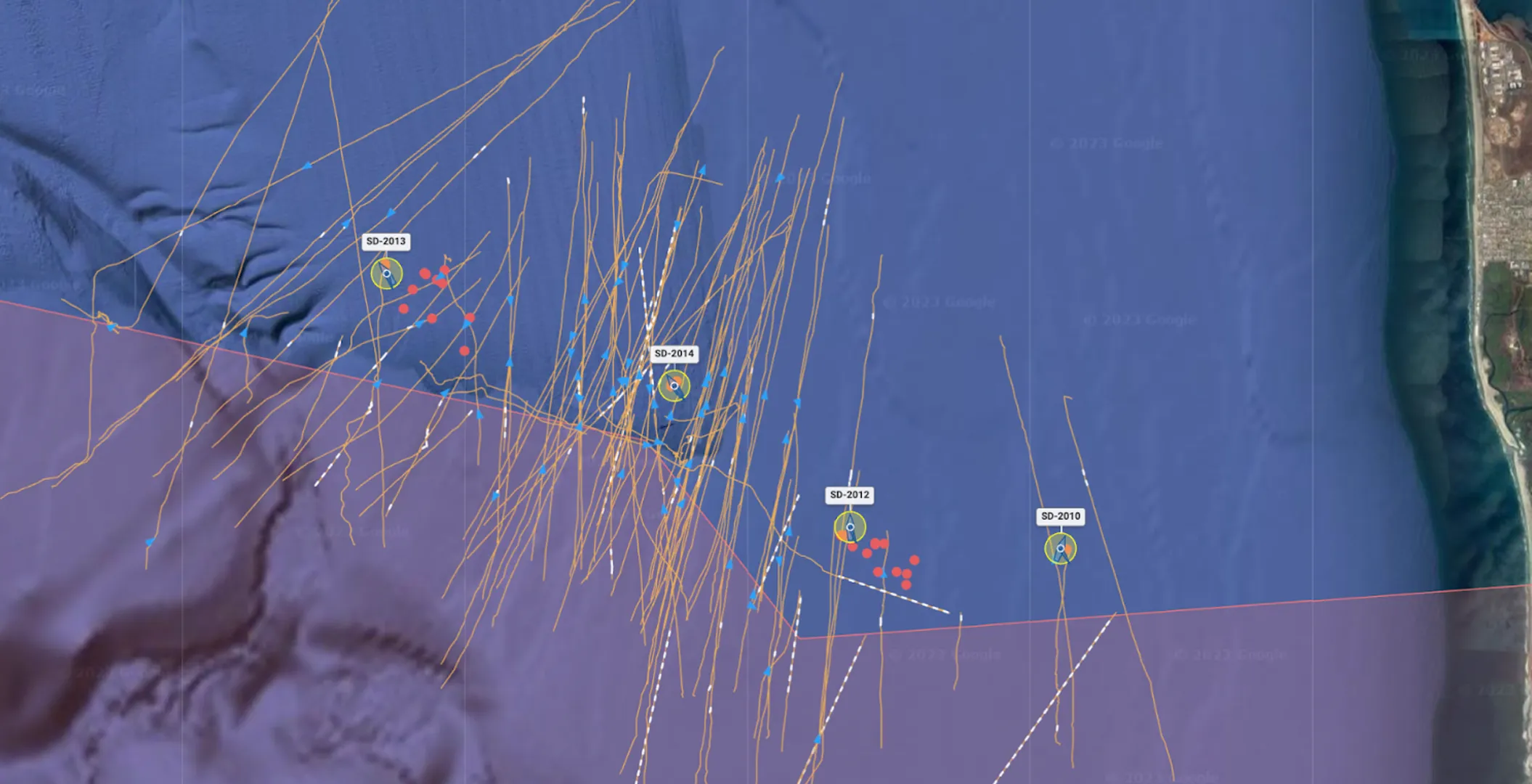
Autonomous patrol patterns that maintain continuous coverage without human steering
Wide-area tracking across EEZs, chokepoints, and remote maritime zones
Continuous information flow to C2 systems for situational awareness and response
Integrated Sensing for Enhanced Intelligence
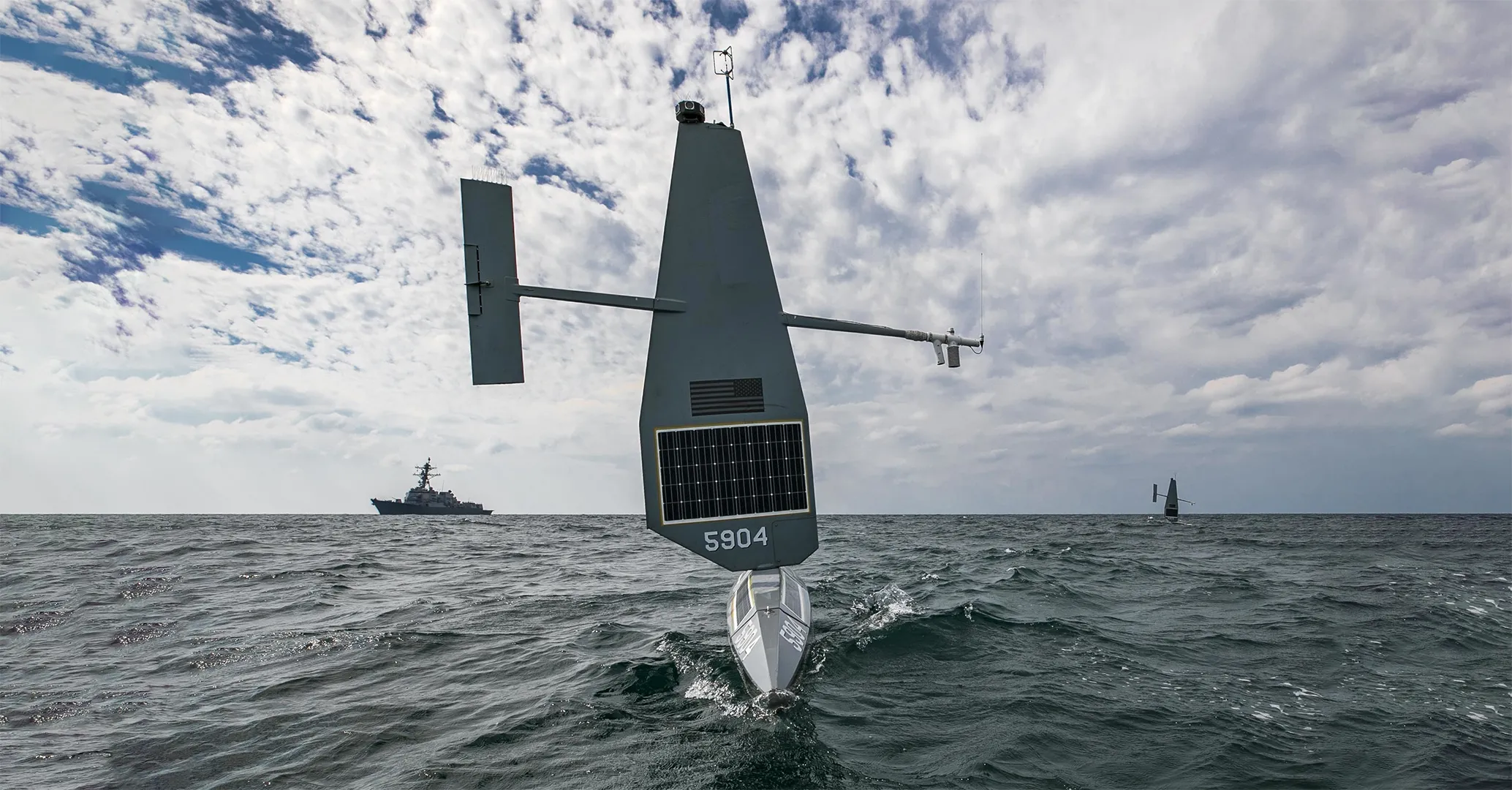
Saildrone USVs carry standardized payloads that combine radar, EO/IR cameras, AIS, and onboard automation. These sensors operate continuously to detect vessel activity and provide correlated tracks in near real time.
High-resolution imagery with onboard AI/ML detection algorithms for identifying vessels, small craft, and anomalous activity.
Reliable detection of non-cooperative and non-AIS targets, performing in poor visibility, at night, and in congested waters.
AIS receivers continuously ingest signals from cooperative vessels and correlate them with radar and EO/IR detections to highlight identity, behavior, and anomalies.
GNSS, inertial sensors, and onboard computing systems support autonomous routing, collision avoidance, and adherence to mission patterns without human steering or GPS dependence.
Data transmission through encrypted links to the Saildrone Mission Portal or your preferred C2 system.
Proven Operations in the Harshest Environments
The Saildrone Wing, in addition to augmenting propulsion systems, enables months-long missions without fuel logistics, extending persistent ISR far beyond conventional patrol patterns.
Minimal acoustic and radar signatures enable discrete monitoring in contested or high-risk regions.
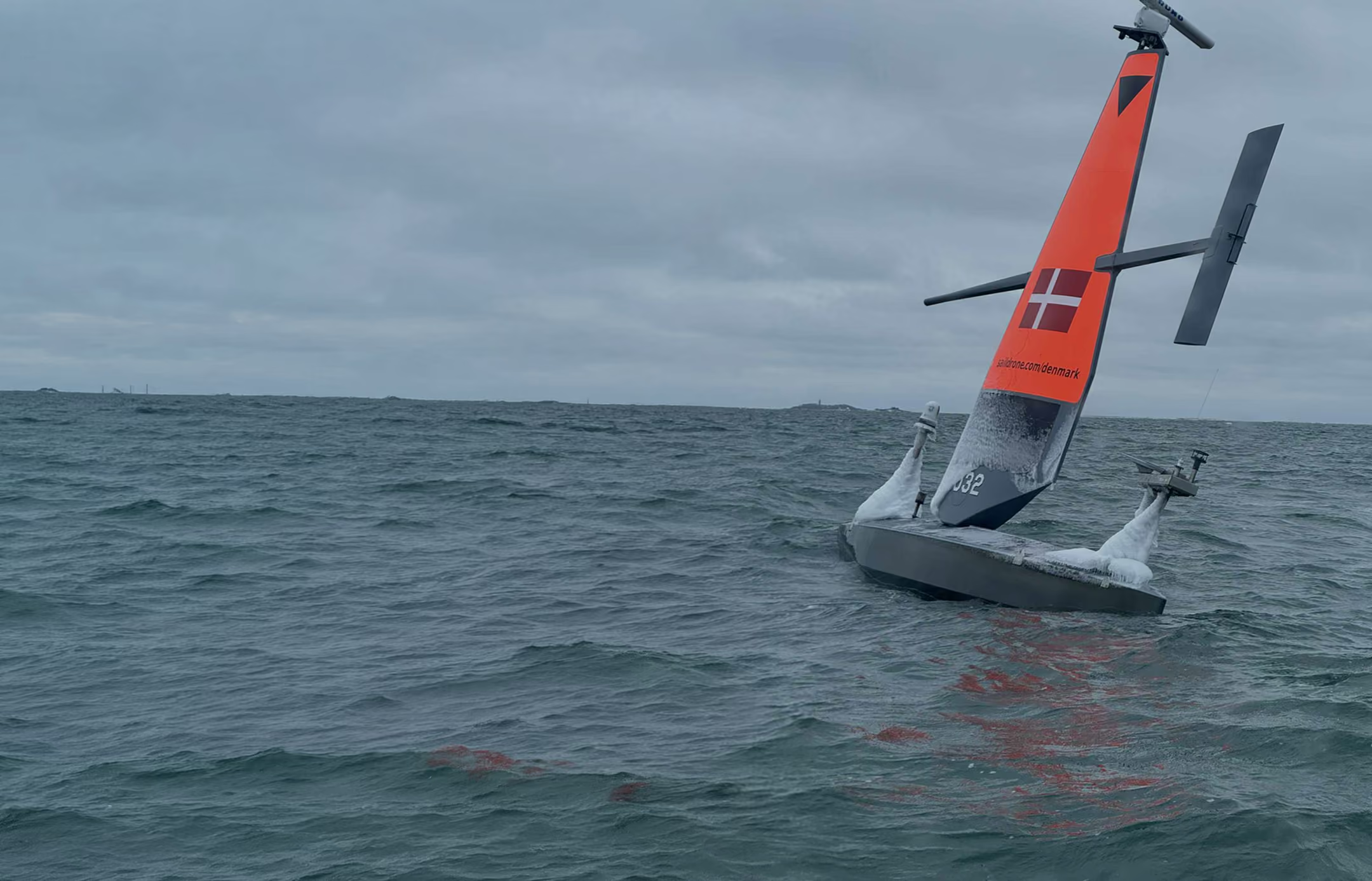
Saildrone USVs operate in remote theaters and withstand extreme weather conditions without requiring manned oversight.
Systems can be deployed individually or as a distributed fleet to extend surveillance across thousands of square nautical miles.