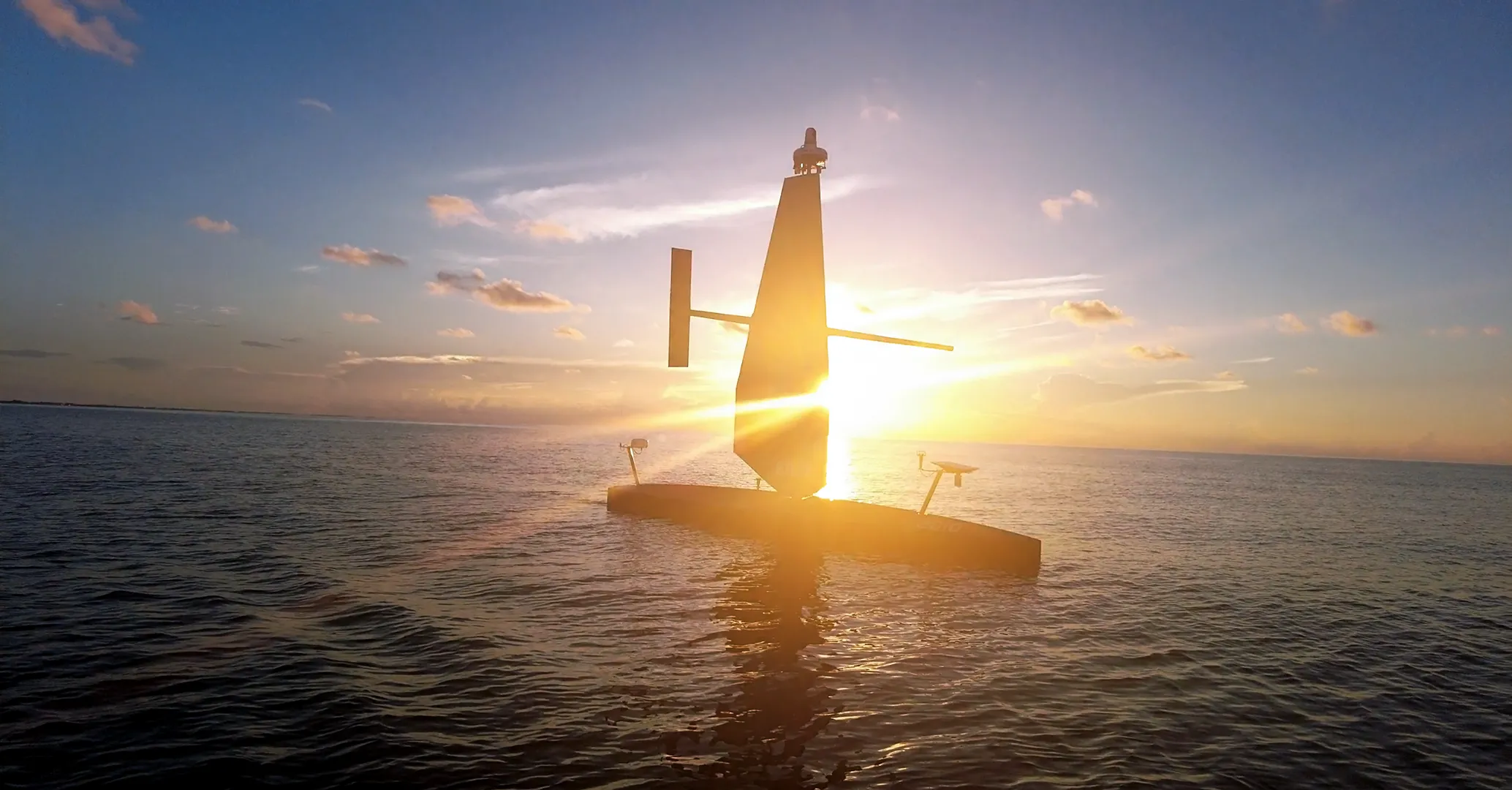
Persistent Undersea Awareness Across Open Ocean and Littoral Battlespaces
Autonomous platforms engineered to support long-endurance acoustic surveillance—delivering the information required to detect, track, and understand undersea activity across both deep-water patrol areas and complex coastal environments.
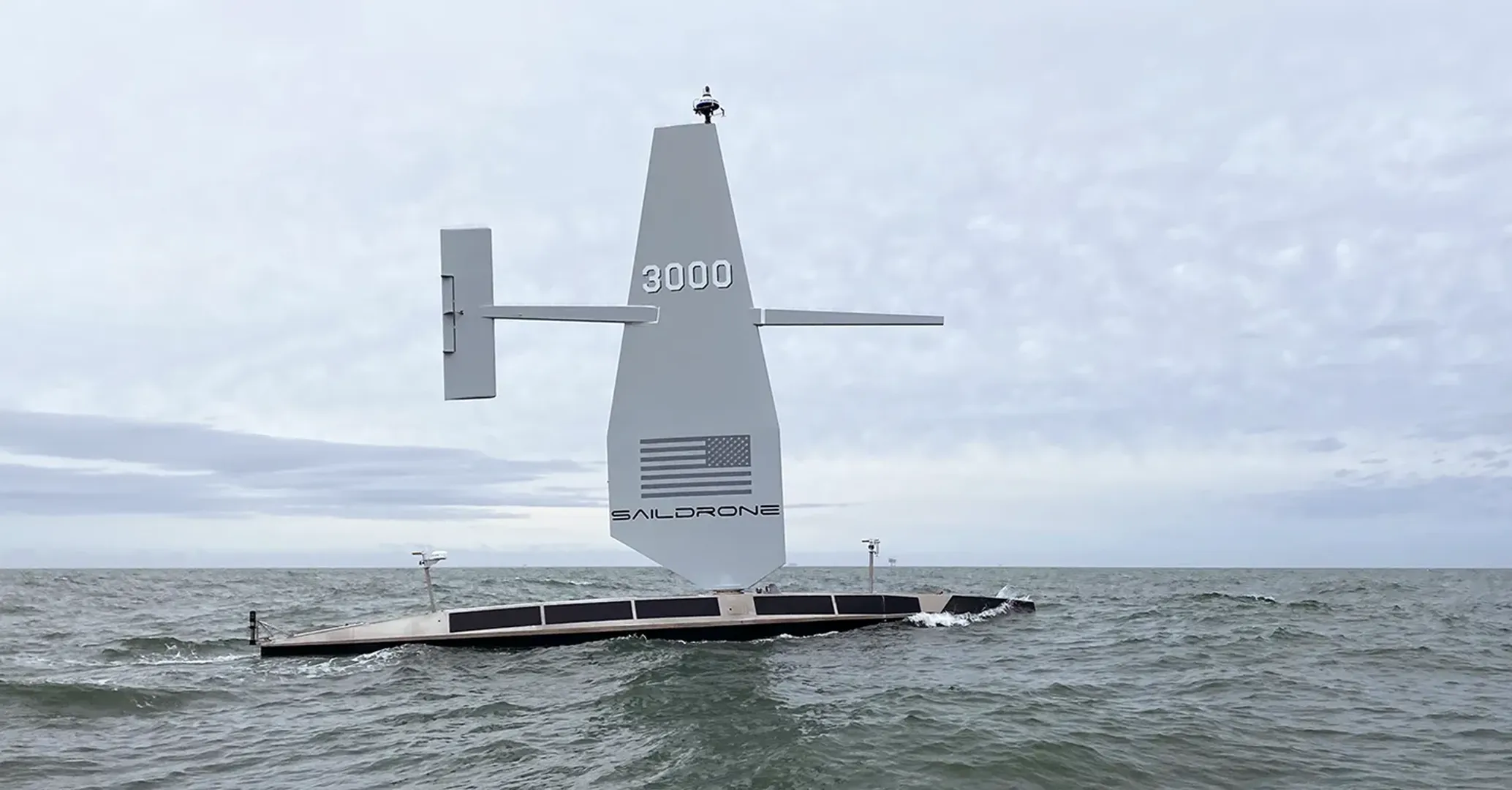
Saildrone provides persistent undersea detection using long-endurance unmanned surface vehicles (USVs) capable of integrating a variety of acoustic sensors. By combining autonomous navigation, low-noise operation, and continuous acoustic collection, Saildrone delivers scalable subsurface intelligence to support anti-submarine warfare (ASW), defense of critical undersea infrastructure (CUI), maritime security, and deterrence—at a fraction of the cost and risk of traditional crewed platforms.
.svg)
Mission‑Ready Solutions for Persistent ASW and Undersea Surveillance
Effective anti-submarine warfare and undersea security depend on continuous acoustic awareness across vast and complex maritime regions. Saildrone extends undersea detection into areas where crewed ships and aircraft are constrained by cost, capacity, endurance, or risk.
Persistent detection and tracking of submarines and undersea contacts
Long-duration acoustic collection
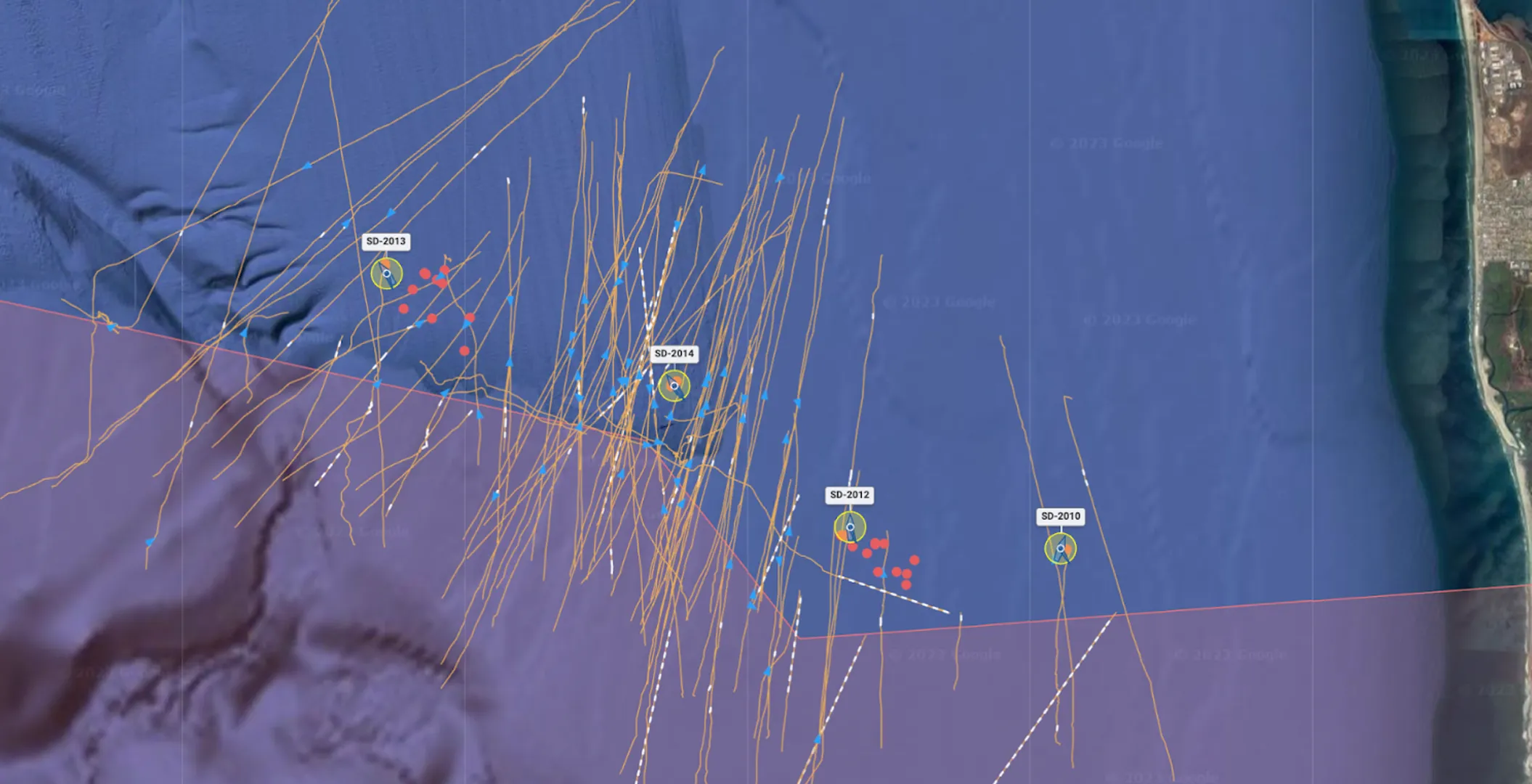
Autonomous patrol across chokepoints, approaches, transit lanes, open ocean, and littoral environments
Wide-area undersea monitoring that complements crewed ASW forces
Integrated Acoustic Systems for Subsurface Intelligence
Saildrone USVs are engineered to integrate a range of passive acoustic sensors while maintaining stable, low-noise operation in both open-ocean and nearshore environments. Autonomous navigation and piloting enable the precise control and operations required to execute this challenging mission.
Support for a variety of array configurations enables a tailored solution specific to the operating environment. Not all threats require the same exquisite sensors, and Saildrone integrates the most cost-effective solution for the threats.
Low-noise operating mode minimizes platform self-noise, enhancing acoustic performance, especially in shallow water and cluttered acoustic environments.
Precision control supports corridor surveys, barrier operations, and precise patrol patterns while maintaining acoustic payload performance.
Continuous acoustic collection with secure handling and transmission for downstream analysis.
Encrypted data transfer to Saildrone Mission Portal or direct integration with acoustic processing and C2 systems.
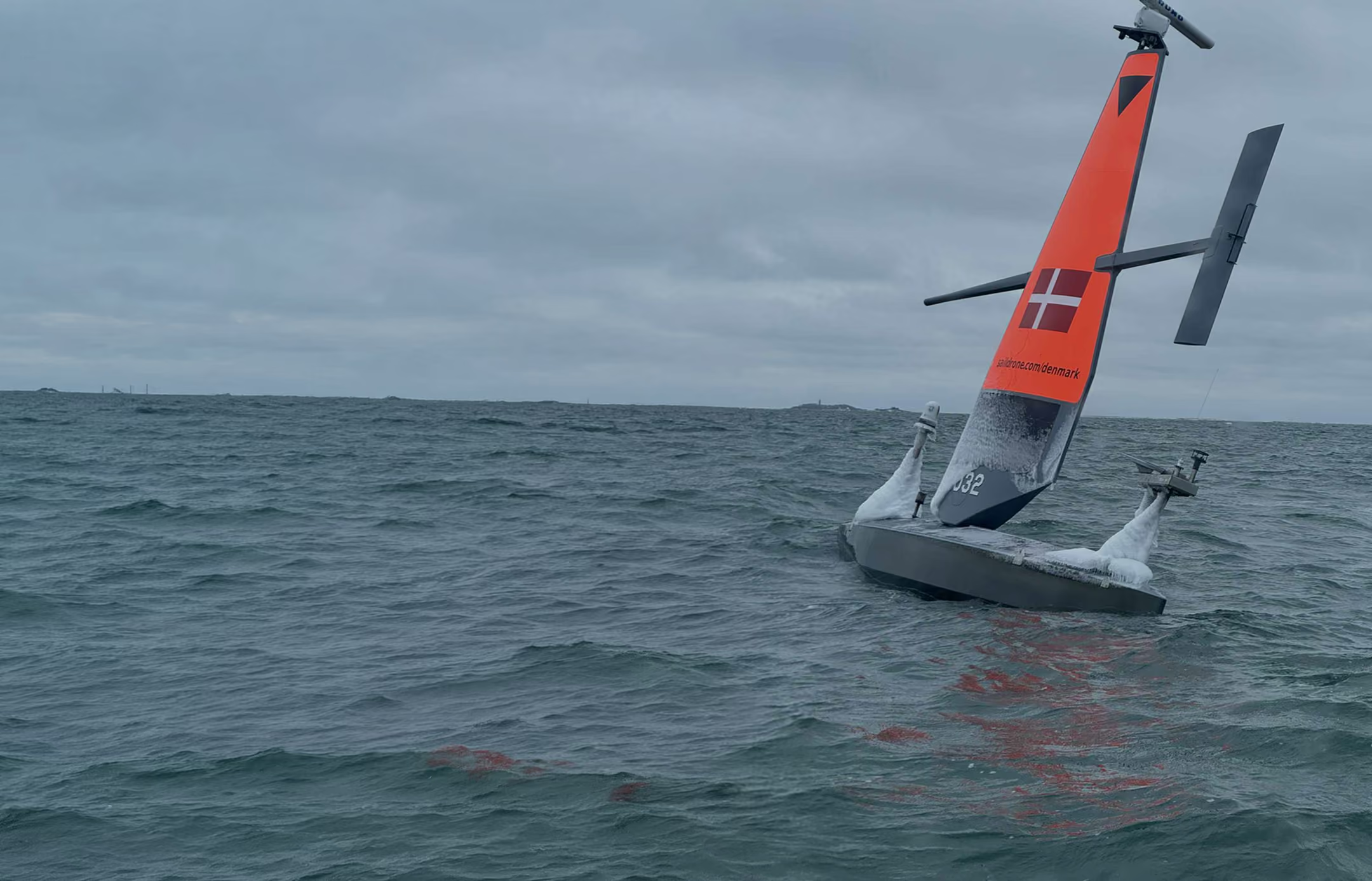
Proven Operations in Complex and High-Risk Maritime Environments
The Saildrone Wing, in addition to augmenting propulsion systems, enables months-long acoustic surveillance missions without fuel logistics or crew rotations.
Autonomous operations dramatically reduce the cost per day of undersea monitoring compared to crewed ships and aircraft.
Saildrone USVs operate in remote theaters and extreme sea states where sustained crewed operations are costly or impractical.
Deploy individual systems or coordinated fleets to monitor wide areas, chokepoints, and priority approaches.