Pioneering Uncrewed Seafloor Mapping Across a Remote Caribbean EEZ
This autonomous mission delivered a modern baseline bathymetric dataset to support navigation, marine stewardship, and the growth of the islands’ Blue Economy.
The Problem
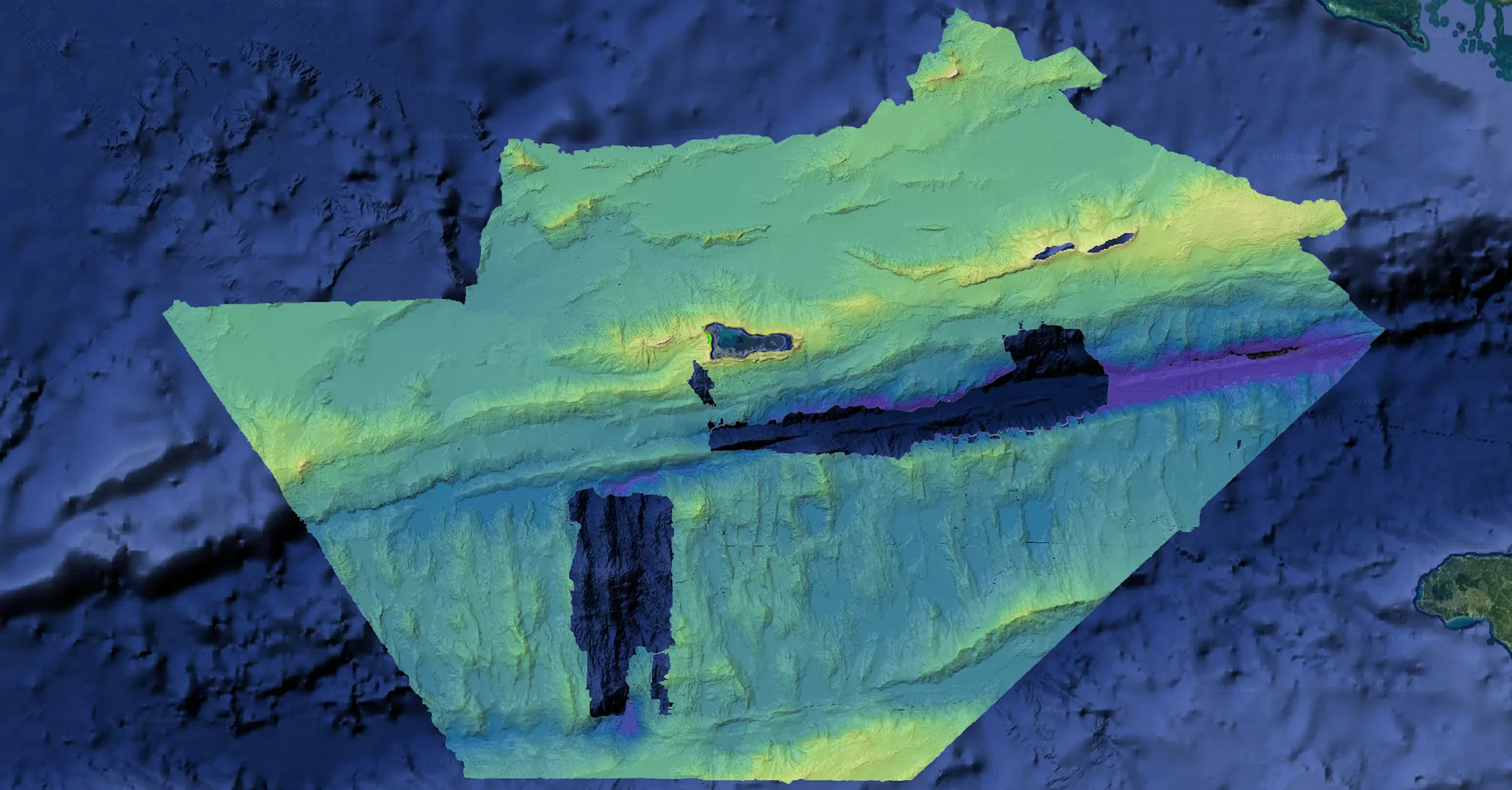
Extending 200 nautical miles from the coastline, the Cayman Islands’ exclusive economic zone (EEZ) is 357 times the area of the islands themselves. Accurate, modern bathymetric data is essential for managing and protecting the natural resources within a nation’s EEZ. Prior to the project, only ~20,000 km² of the EEZ had been surveyed with modern multibeam sonar, concentrated around the Cayman Trench.
The goal of this mission was to deliver a modern baseline dataset to support maritime navigation and charting, sustainable fisheries, offshore energy planning, resource and mineral evaluation, and protection of vulnerable marine ecosystems.
The mission was philanthropically funded by the London & Amsterdam Trust, with the intent of leaving a lasting legacy for the Cayman Islands.
Outcome
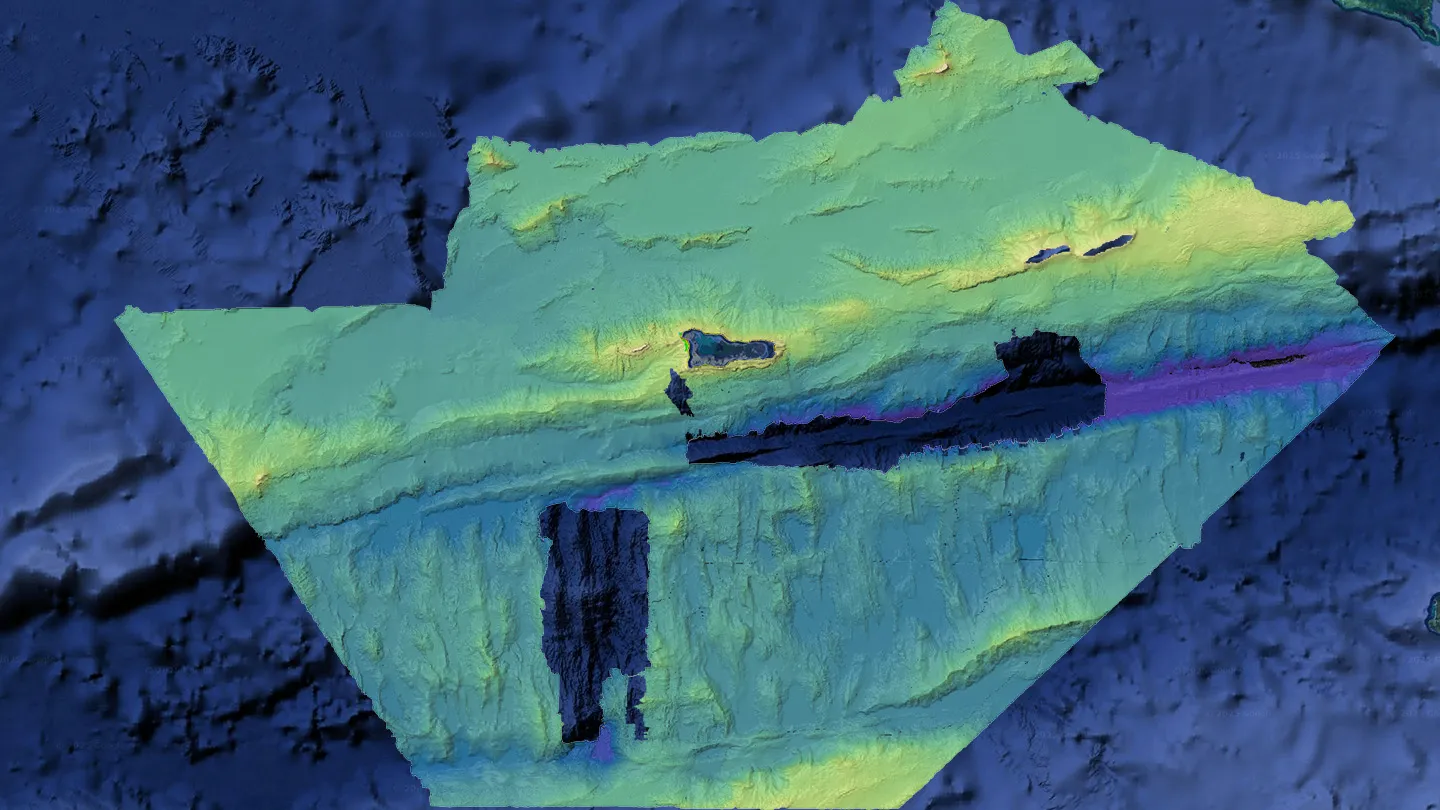
Saildrone completed autonomous multibeam mapping across the Cayman Islands EEZ, surveying ~90,000 km² across depths from 20 m to 7,000 m, including priority coverage of four key fishing banks: 60 Mile Bank, Lawfords Bank, Pickle Bank, and 12 Mile Bank.
All raw bathymetric, backscatter, and ocean-profile data will be transferred to the UK Hydrographic Office (UKHO) for processing and chart updates. Additionally, a low-resolution dataset will be provided to Seabed 2030.
Operationally, the mission encountered significant challenges, including unprecedented sargassum blooms and severe weather; Saildrone developed new SVP-clearing approaches and enhanced remote diagnostics to detect biofouling early, and validated the platform’s ability to remain on survey up to sea state seven.
The Cayman Islands is now the first Caribbean country to have its entire EEZ mapped.

“Our waters hold such great value to us for a myriad of reasons, ranging from recreational to economic. Conducting this assessment will allow our government to make data-driven decisions that will strengthen our policies and legislation as it relates to our maritime infrastructure. I am grateful to all parties who have worked to bring this initiative to this junction and am eager to learn of the survey’s results and outcomes.”
Start Your Mission Today
Contact us now to discuss your mission requirements.