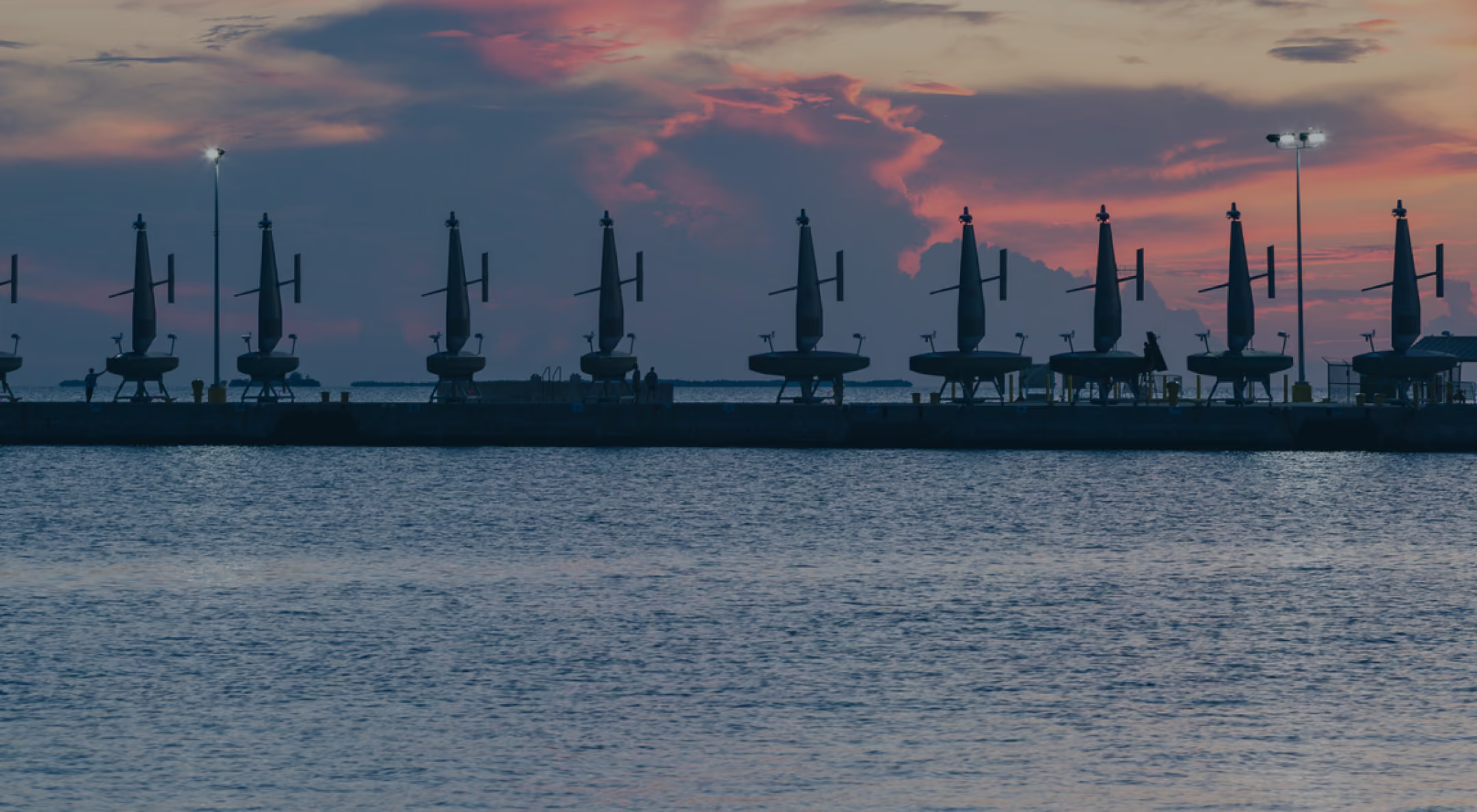
Saildrone President, VADM (ret.) John Mustin on operating with regional navies and coalition forces in the Middle East since Saildrone’s pioneering integration with the US Navy’s Task Force 59 began in 2021.
Delivering Persistent Maritime Awareness for Navies in the Middle East
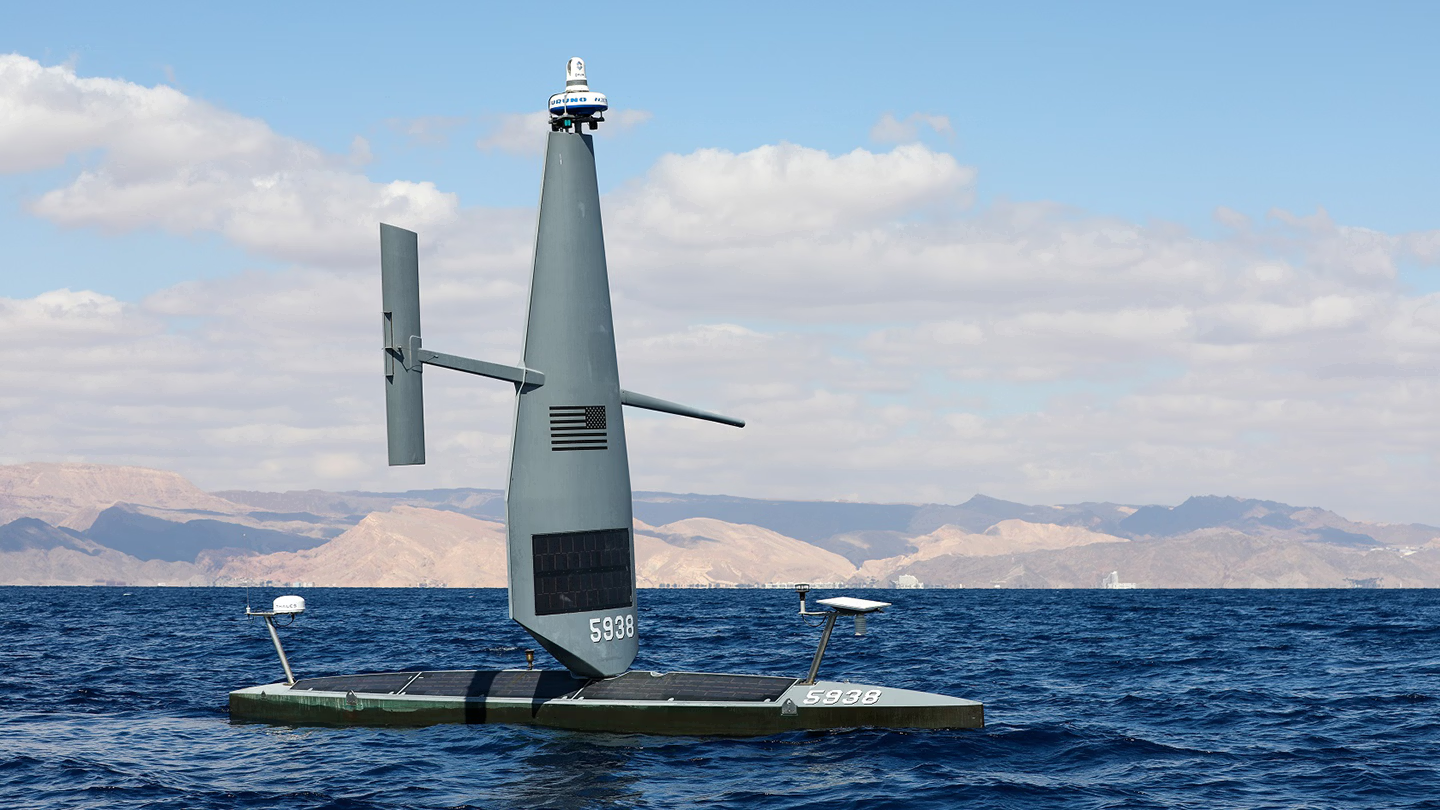
A Saildrone Voyager unmanned surface vehicle (USV) during IMX 2025. US. Navy Photo by Chief Petty Officer Arif Patani. The appearance of U.S. Department of Defense (DoD) visual information does not imply or constitute DoD endorsement.
Published on
February 7, 2026
Read time:
5
Minutes
Since the US Navy established Task Force 59 to integrate unmanned systems and artificial intelligence into fleet operations, the need for persistent maritime domain awareness throughout the Middle East has continued to increase.
Non-state actors and criminal networks are increasingly targeting military and commercial ships traversing trade routes in the Red Sea and strategic chokepoints such as the Bab-el-Mandeb. Drug smuggling, human trafficking, and piracy remain daily challenges. The region’s size and geographic complexity make it impossible for manned warships and aircraft alone to monitor every sea lane, trading route, and chokepoint continuously.
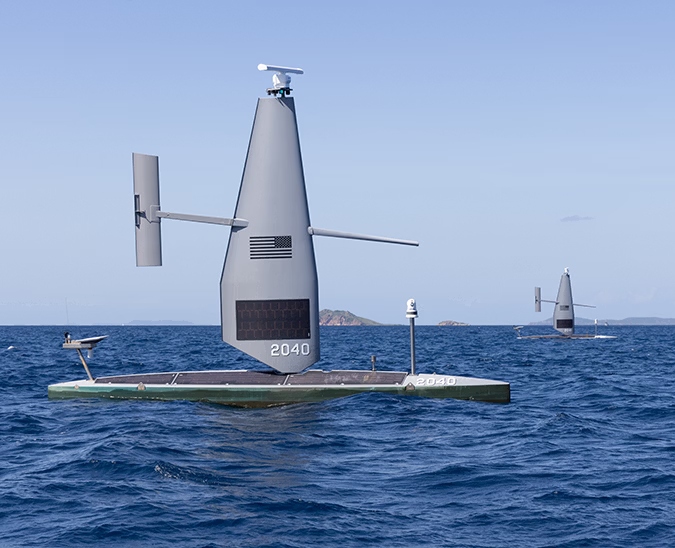
To address these challenges, Task Force 59 has seamlessly integrated increasingly capable unmanned systems fueled by artificial intelligence into daily operations. As early as 2021, Saildrone Explorer unmanned surface vehicles (USVs) provided persistent intelligence, surveillance, and reconnaissance (ISR) data, despite hostile interference. Following initial operations, six Saildrone Voyager USVs—offering enhanced capabilities relative to the Explorer platform—were deployed and continue to routinely integrate with the US Fifth Fleet and the Combined Maritime Forces (CMF) coalition.
For over five years, Saildrone has maintained a persistent presence in the region, with USVs remaining on station for up to three consecutive months at a time between regular service—operating autonomously without human interaction on the water. The ruggedized maritime platforms perform enduring missions despite challenging weather, highly charged geopolitical events, and dense maritime traffic. The innovative Saildrone Wing, a core part of the platform design, harvests energy to supplement the onboard diesel-electric motor, enabling the extreme range and endurance necessary to deliver and maintain persistent warfighting advantage. By extending and maintaining domain awareness without increasing risk to crews, Saildrone enables navies to deploy their most capable assets where their exquisite capabilities matter most.
Responding to threats in real-time
Saildrone’s proven track record includes continuous operations during chaotic regional events and complex environmental demands. While operating in the Red Sea and Arabian Gulf, Saildrone platforms regularly overcome drastic temperature changes, navigate dense maritime traffic, and remain on mission despite extreme sea states.
For example, in response to increased regional GPS jamming and spoofing, Saildrone designed and implemented new hardware and software capabilities to enable its USVs to operate safely and effectively in GPS-denied environments. Now a standard capability, this enhancement leverages multiple forms of localization, ensuring operations continue without relying solely on satellite systems. Saildrone recently demonstrated the value of this capability during IMX 2025, where its USVs were the only unmanned platforms able to maintain surveillance in a GNSS-contested environment.
Adapting to and overcoming unforeseen or unlikely circumstances in real time is necessary for modern navies and coast guards to counter the full spectrum of evolving maritime threats. Saildrone USVs act as a hedge force against a wide array of threats by supplementing crewed platforms, and evolving operations as conditions change—providing responsive, scalable capabilities at a fraction of the cost of manned vessels.
In addition to adapting to threats, Saildrone also prioritizes interoperability among allies and partners such as the Combined Maritime Forces, operating alongside individual ships, in larger formations, or patrolling independently without an escort. Real-time, relevant ISR data is integrated into a customer’s common operating picture, resulting in a “single pane of glass” display that fuses inputs from multiple platforms and sensors for decision makers.
Proven autonomy built on real-world operations
With more than 78,000 nautical miles transited in the Red Sea since 2023 and 2,000,000 nm globally over 12+ years of operations, Saildrone USVs have amassed an unmatched track record of performance. This is not a promise of future autonomy, but a proven capability operating on the water today.


[
NEVER MISS AN UPDATE
]
Stay informed with the latest research findings and updates.
By clicking Sign Up you're confirming that you agree with our Privacy Policy.