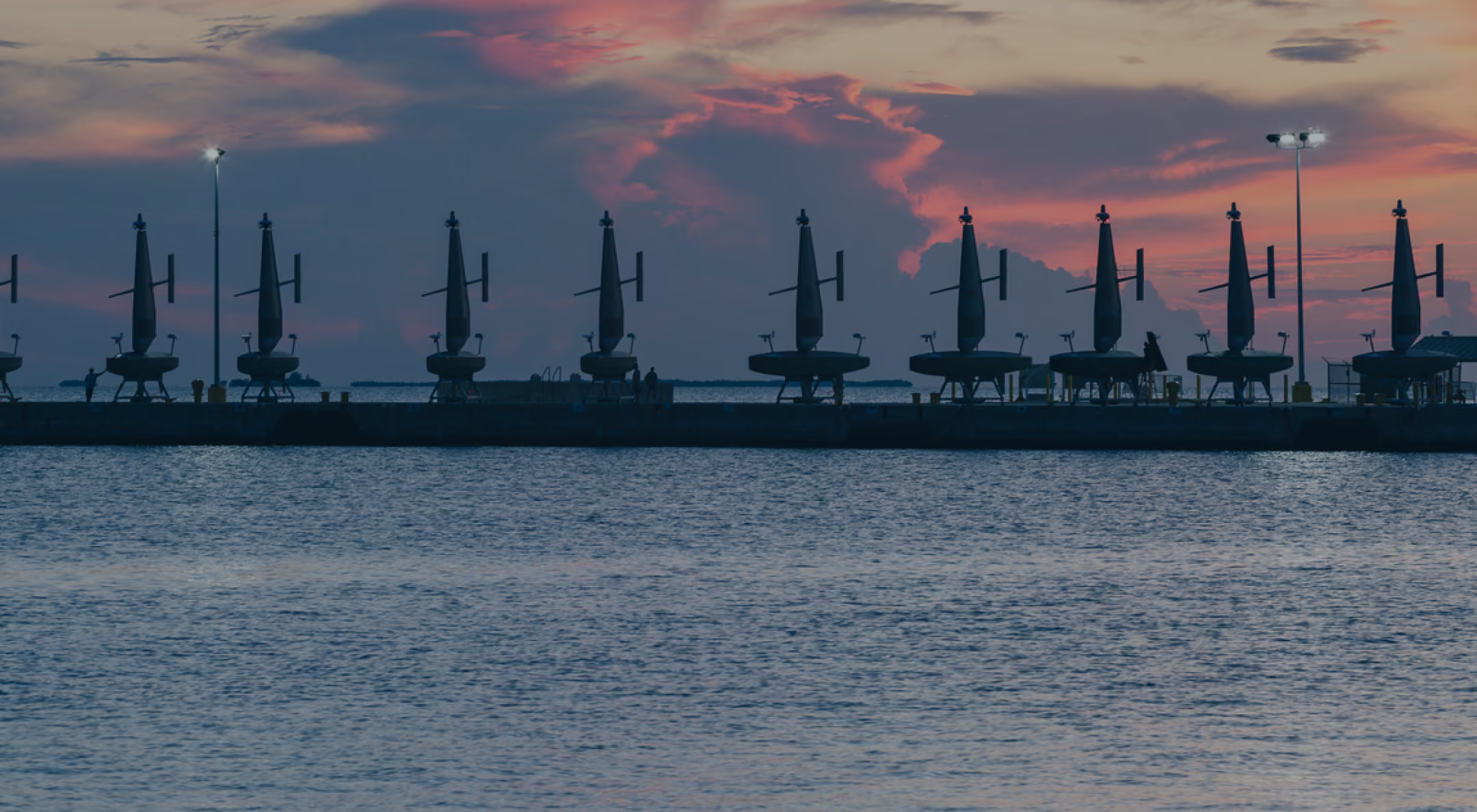
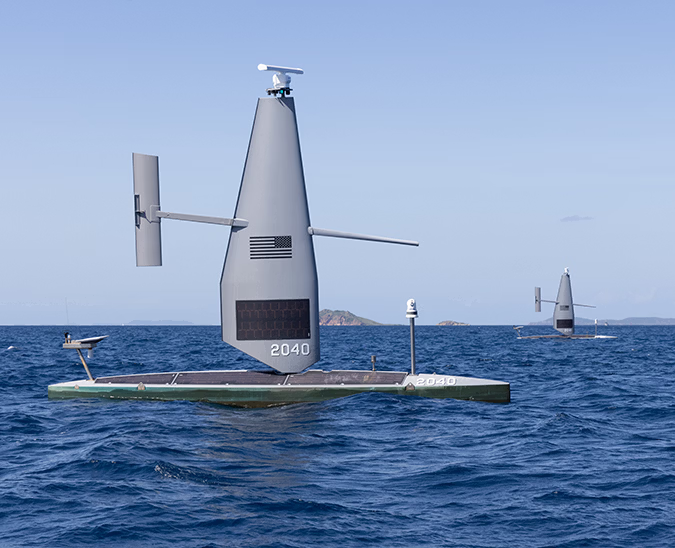
The Saildrone Voyager, equipped with Innomar’s Sub-bottom profiler, provides an optimal capability to protect critical undersea infrastructure in the Baltic Sea.
Saildrone Expands Persistent Maritime Capabilities with Sub-Seafloor Awareness in the Baltic
Published on
March 3, 2026
Read time:
5
Minutes
Following numerous attacks by unidentified hostile actors, the leaders of the Baltic states have committed to jointly expanding their ability to monitor and protect critical undersea infrastructure in the Baltic Sea.
Scattered across the 110,000-square-nautical-mile (422,000-square-kilometer) maritime region are energy and communication cables, pipelines, and wind pylons—all potential targets for disruption.
Protecting undersea infrastructure requires continuous maritime presence, not episodic patrols. Persistent surface and subsurface awareness eliminates predictable gaps that adversaries can exploit and strengthens deterrence in contested waters.
Saildrone, the global leader in autonomous ocean exploration, has successfully integrated and operated a sub-bottom profiler (SBP) on a Saildrone Voyager unmanned surface vehicle (USV).
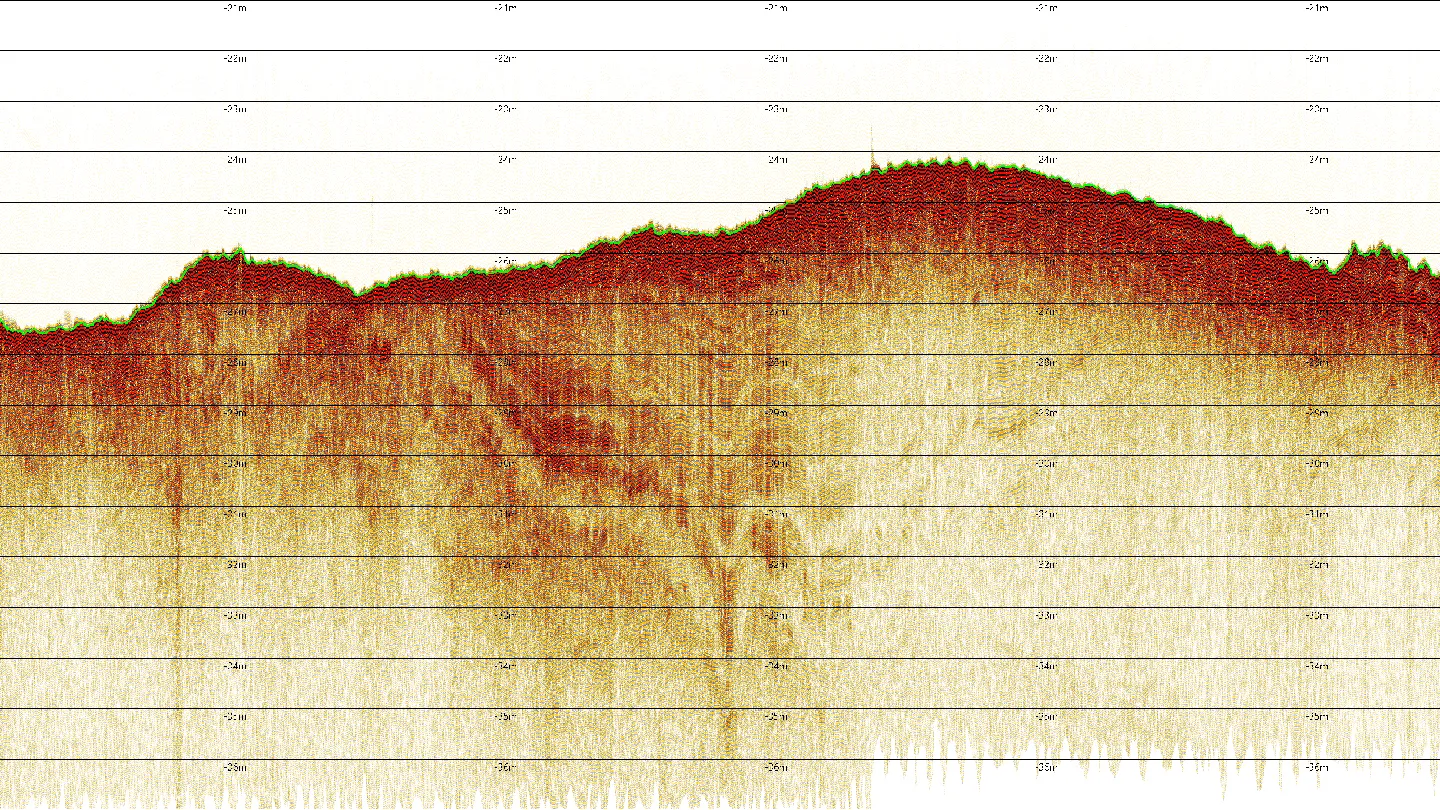
The Innomar Medium-USV SBP is a parametric high-resolution system designed to acquire full-waveform acoustic data that reveals the structure, layering, and composition of the seafloor and sub-seafloor. The SBP enables detection of changes beneath the seafloor that may indicate tampering with pipelines, cables, or other critical infrastructure. Saildrone employed this capability in the Baltic Sea in support of the Danish Ministry of Defence Acquisition and Logistics Organisation (DALO).
“The combination of the Innomar SBP and the Saildrone Voyager presents a wide range of opportunities for our customers to detect and track critical changes in seafloor geology, whether for the protection of subsea cables or building pylons for wind turbines,” said Brian Connon, vice president of ocean mapping at Saildrone. “Saildrone is proud to add the Innomar SBP to the Voyager’s array of capabilities and to support the Danish government in enhancing its maritime awareness.”
Equipped with the Innomar Medium-USV SBP, a Saildrone Voyager can acquire high-resolution, deep-penetrating sub-seafloor imagery for mapping sediment layers, identifying geological structures, and investigating stratigraphy. It is well-suited for coastal and shelf sediment surveys, the identification of buried geological features, and the detection of larger subsurface anomalies or utilities.
Saildrone can operate the SBP to depths of up to 250 meters and penetrate the seafloor up to 70 meters, depending on sediment type.
Maritime domain awareness in the Baltic and around the world
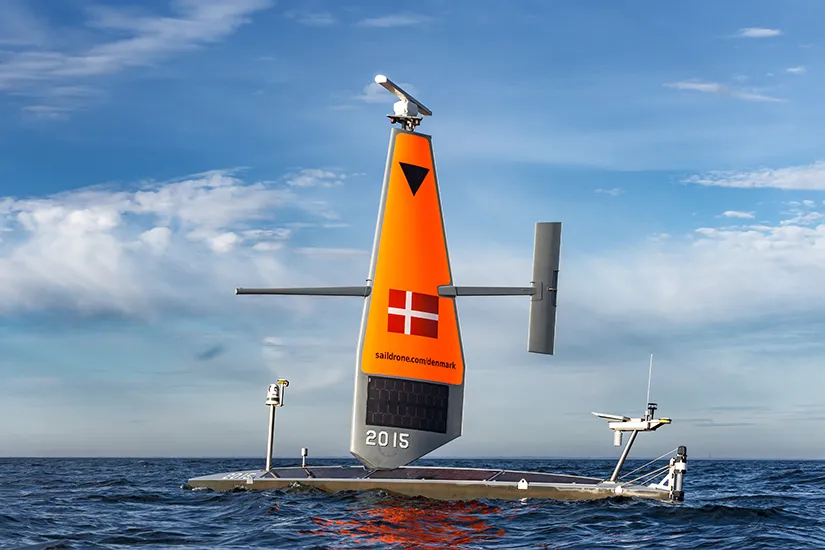
Saildrone has been operating four Voyager USVs in the Baltic Sea for six consecutive months. The mission has achieved 92% uptime across its fleet under a range of harsh weather and sea-state conditions—ensuring decision-makers retain situational awareness in a strategically sensitive region. Saildrone USVs sustain surface and subsurface surveillance for months at a time. The proven design of the Saildrone Wing, which harvests energy to supplement the platform’s engine, provides extreme range and endurance, ensuring uninterrupted coverage.
Saildrone operations in the Baltic Sea are based out of the company’s European subsidiary in Copenhagen, which supports the Northern European region.
The 10-meter Voyager is one of three classes of Saildrone platforms. The 7-meter Explorer delivers continuous environmental observations that support operational planning. The 20-meter Surveyor is built for global defense missions, ongoing maritime intelligence, reconnaissance, and deep-ocean mapping to gain an undersea advantage.
Monitoring a region as vast as the Baltic Sea requires round-the-clock coverage that cannot be provided cost-effectively by traditional manned platforms. Furthermore, capital assets and their crews must remain focused on the missions only they can perform. With more than 60,000 cumulative days at sea, Saildrone provides enduring coverage regardless of weather conditions or sea states.
Saildrone’s adaptable USVs, which have logged over 20,000 nautical miles in the Baltic Sea alone, combined with Innomar’s versatile sub-bottom profiler, deliver a scalable capability for persistent oversight of critical infrastructure at the surface and beneath the seabed.


[
NEVER MISS AN UPDATE
]
Stay informed with the latest research findings and updates.
By clicking Sign Up you're confirming that you agree with our Privacy Policy.